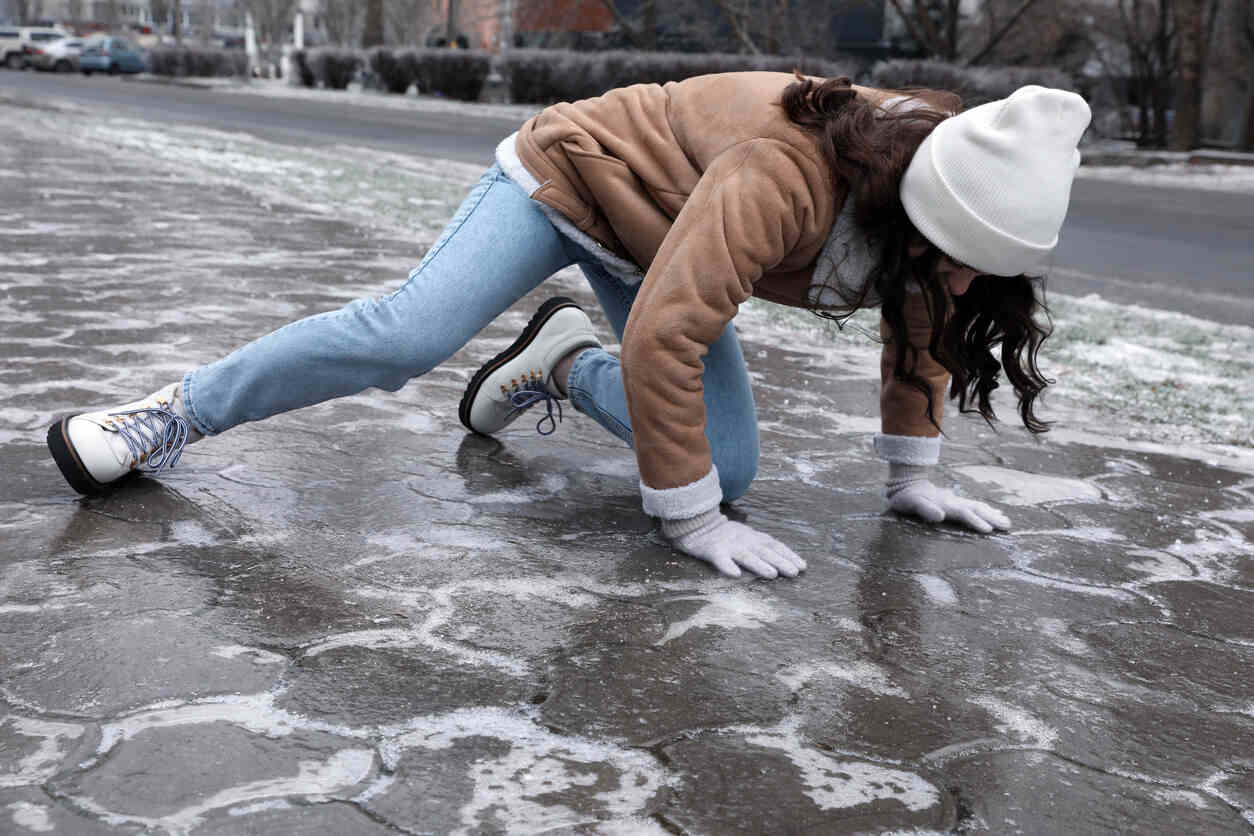
Winter in Salt Lake City brings snow-packed sidewalks, icy parking lots, and rapidly changing conditions that create serious fall hazards. While snow and ice are expected parts of Utah winters, injuries caused by untreated walkways and poorly maintained properties are not inevitable. When property owners fail to address known hazards, winter slip-and-fall injuries can quickly become a matter of legal liability.
Understanding how snow removal rules, local ordinances, and duty-of-care obligations apply during winter storms is essential for both injured individuals and property owners navigating liability questions.
Snow and Ice Do Not Automatically Excuse Negligence
Property owners often assume that winter weather relieves them of responsibility for slip and fall injuries. Utah law does not support that assumption. While no one can control the weather, property owners are expected to take reasonable steps to mitigate known hazards, such as snow and ice, as they accumulate.
Negligence is not based on the mere presence of snow or ice. It is based on whether a property owner failed to act reasonably under the circumstances.
Salt Lake City Snow Removal Expectations
Salt Lake City ordinances generally require property owners to clear snow and ice from sidewalks adjacent to their property within a reasonable timeframe after snowfall ends. These requirements are in place to protect pedestrians and maintain safe public walkways during the winter months.
Failure to comply with local snow removal rules can become an important factor in slip and fall cases, particularly when:
Snow or ice remains long after a storm has ended.
Walkways are left untreated despite repeated freeze-thaw cycles.
De-icing materials are not applied in known trouble areas.
Foot traffic is encouraged while hazards remain unaddressed.
While ordinances alone do not determine liability, they help establish what constitutes reasonable care in winter conditions.
Duty of Care During Active Storms
Slip and fall claims often hinge on timing. During an active storm, property owners may have more flexibility. However, that flexibility is not unlimited. Courts look at whether conditions were allowed to worsen unnecessarily or whether property owners ignored hazards they knew would persist.
Key considerations include:
Whether snow removal or de-icing began within a reasonable period.
Whether high-traffic areas were prioritized.
Whether known drainage or refreeze zones were addressed.
Whether warnings or barriers were used when hazards could not be immediately corrected.
Once a storm ends, the expectation to address hazards increases.
How Failure to Shovel or De-Ice Establishes Negligence
Negligence in winter slip-and-fall cases often arises from inaction rather than from the storm itself.
Examples that frequently support liability include:
Leaving compacted snow that turns into ice.
Ignoring recurring icy patches near entrances or ramps.
Failing to apply salt or de-icer after temperatures drop.
Allowing meltwater to refreeze overnight without treatment.
Neglecting maintenance in parking lots and walkways.
When hazards are predictable and preventable, failure to address them may expose property owners to liability.
Different Standards for Different Properties
Not all properties are evaluated the same way. The duty of care may vary depending on the type of property and how it is used.
For example:
Commercial properties must anticipate customer traffic and address hazards promptly.
Apartment complexes have ongoing obligations to residents and guests.
Office buildings are expected to maintain safe access for employees and visitors.
Retail locations must consider increased foot traffic during the winter months.
The more a property invites public use, the higher the expectation for proactive snow and ice management.
Why Slip and Fall Injuries Are Often Serious
Winter slip-and-fall injuries often result in more than minor bruises.
Falls on ice often involve sudden loss of balance, leading to high-impact injuries such as:
Fractures to wrists, ankles, or hips.
Head injuries or concussions.
Back and spinal injuries.
Soft-tissue damage requiring prolonged treatment.
These injuries can disrupt work, mobility, and daily life, particularly for older adults.
Evidence That Matters in Winter Slip and Fall Claims
Because snow and ice conditions change quickly, early documentation is critical.
Evidence often includes:
Photos or videos of the hazard shortly after the fall.
Weather records showing the timing of snowfall and freezing conditions.
Maintenance or snow removal logs.
Witness statements.
Surveillance footage.
This information helps establish whether the property owner had sufficient time and opportunity to address the hazard.
How Waddoups Law Evaluates Winter Slip and Fall Cases
Waddoups Law represents individuals injured in winter slip and fall incidents throughout Salt Lake City and the surrounding areas. Our team evaluates how snow removal rules, property use, and timing interact to determine whether a property owner failed to meet their duty of care.
We understand that winter injuries often occur under circumstances that property owners try to dismiss as unavoidable. Careful investigation helps distinguish unavoidable conditions from preventable negligence.
I can’t say enough good things about Waddoups Law Personal Injury Attorneys! I had some legal issues and decided to go with this firm. I’m so happy I did! The...
L L
These folks are amazing! Michelle is honest and upfront about the process and the different ways things can go. Thank you for all of your hardwork!
Mr Beasley
Looked over a contract for me. Was very professional and timely. Thanks George!
Chase Thomason
George and Jeri were incredible. I was riding my bike and was hit by a car and broke my back and had a TBI. I was so overwhelmed, but trying...
Sherie Christensen
George (& Geri) have repeatedly bested my expectations. After a car accident they took the majority of the pressure off so I could focus on getting the treatments I needed...
Natalie Clements
My wife and I had the privilege of working with Waddoups Law Personal Injury Attorneys, specifically Geri Kelley, and we cannot express our gratitude enough for their outstanding legal support....
Trent Covert
I am so grateful to George Waddoups and his team for effectively helping me through a very challenging legal matter. His knowledge and expert guidance made a significant difference in...