I-15 is the backbone of Utah’s transportation system. It carries local commuters, tourists, and long-haul freight traffic from Utah County to Salt Lake City, through Weber and Davis Counties, and into the northern stretch toward Idaho. With high traffic volume and fast travel speeds, multi-vehicle collisions happen more often than most people realize. These chain-reaction crashes can involve several cars and commercial trucks, and multiple insurance companies, each trying to shift responsibility to someone else.
For injured drivers and passengers, the aftermath can feel overwhelming. Sorting through conflicting statements, scattered debris, and competing insurers requires more than guesswork. At Waddoups Law, our personal injury attorneys help Utah families make sense of these events and protect their rights at every step.
Why Multi-Vehicle Crashes Happen on Utah’s I-15 Corridor
I-15 experiences constant congestion, merging traffic, construction zones, and sudden slowdowns. These conditions create situations where a single mistake can escalate quickly.
Common causes include:
Following too closely.
Speeding during heavy traffic.
Distracted driving.
Sudden lane changes.
Poor visibility due to weather or dust.
Large trucks are unable to stop in time.
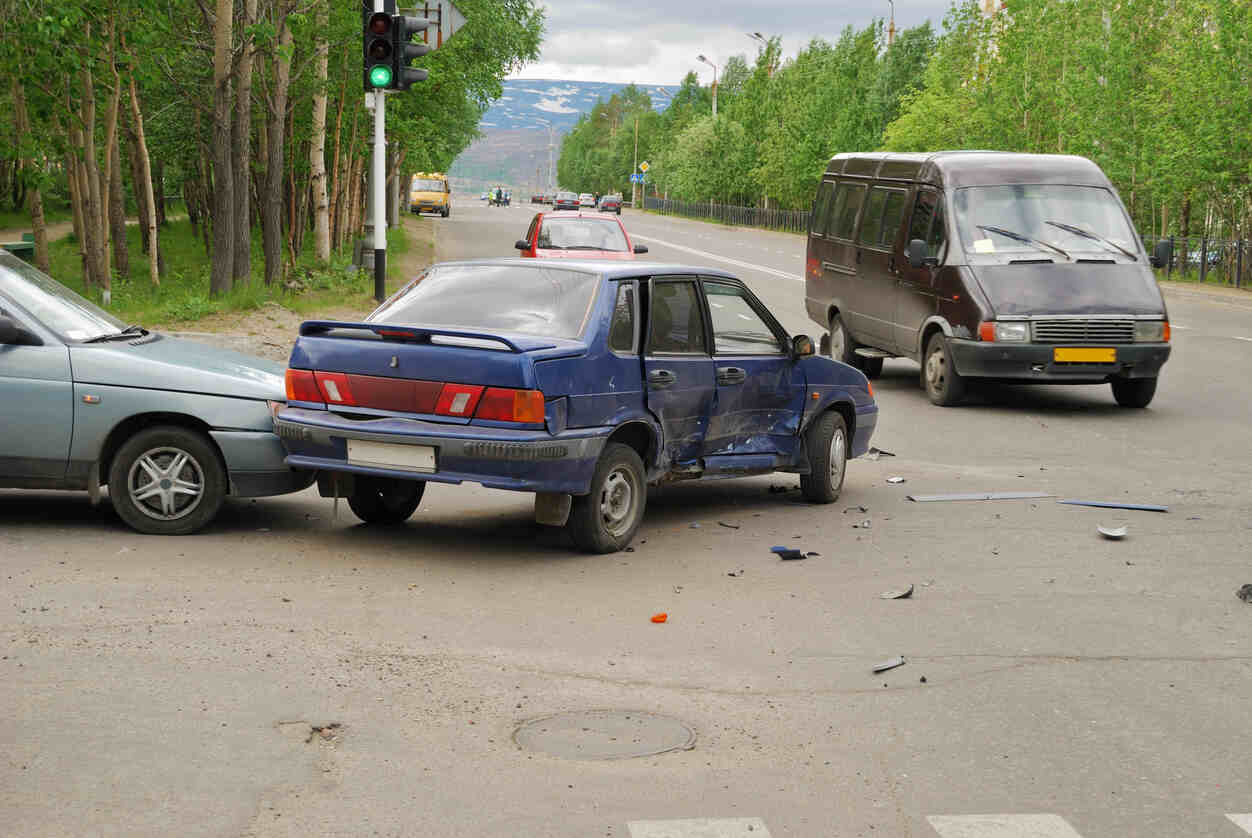
Once the first impact occurs, trailing vehicles often have nowhere to go. This is why even a minor initial collision can trigger multiple secondary crashes.
How Chain-Reaction Crashes Typically Unfold
Multi-vehicle collisions rarely involve only one impact. Instead, they develop in stages.
A driver brakes too late and strikes the car ahead.
Another driver swerves to avoid the stopped vehicles.
A third driver, traveling too fast or too close, cannot stop in time.
In severe cases, the chain of crashes continues for several seconds. By the time traffic comes to a stop, multiple drivers may believe they were not at fault and begin pointing fingers at one another. Insurance companies often do the same.
Understanding the sequence of events is critical for determining liability.
Why Determining Fault Is More Complicated in Multi-Vehicle Crashes
Liability is not always apparent in a chain-reaction collision. Several factors may have contributed to the crash, and each insurer may argue that another party is responsible.
These cases become complicated because:
Drivers often remember the crash differently.
Damage patterns can be confusing.
Weather or road conditions may have played a role.
Large trucks need longer stopping distances.
Not all impacts happen at the same time.
Utah’s comparative negligence rules allow fault to be divided among multiple drivers, which means each party’s percentage of responsibility affects how compensation is awarded.
Preserving Evidence After a Multi-Vehicle Crash
Evidence disappears quickly on I-15. Cars are moved to reopen lanes, debris is cleared, and skid marks fade. This is why immediate preservation of evidence is essential for injured victims.
Substantial evidence may include:
Dash cam or traffic camera video.
Photos of vehicle positions and damage.
Witness statements from other drivers or passengers.
Event data recorder information from commercial trucks.
Cell phone records if distracted driving is suspected.
Weather data and road condition reports.
Investigators may also analyze the length of skid marks, vehicle resting positions, and impact angles to reconstruct the sequence of events.
How Liability Gets Divided in Utah Multi-Vehicle Collisions
Utah’s comparative negligence standard allows fault to be shared among multiple drivers. A driver may be partially responsible even if another motorist initiated the crash.
For example:
One driver may have been speeding.
Another may have been following too closely.
Another may have failed to react in time due to distraction.
The challenge is proving which actions contributed to the final chain of events. This is where a detailed investigation becomes essential. A well-supported claim helps prevent insurers from unfairly blaming an innocent driver simply because they were caught in the middle of the crash.
The Role of Commercial Trucks in Multi-Vehicle Collisions
Large trucks are often involved in I-15 pileups because of their size and braking distance. A fully loaded semi-truck requires significantly more distance to stop, especially during congestion or bad weather. When a truck cannot slow down in time, it may strike multiple vehicles, amplifying the severity of the crash.
Truck-related collisions involve additional evidence, such as:
These details may indicate whether the trucking company failed to comply with safety regulations.
How Waddoups Law Helps Injured Utah Drivers After a Multi-Vehicle Crash
When several insurance companies are involved, injured victims often feel outnumbered. Each insurer may try to reduce its share of liability or shift responsibility onto another driver. Our attorneys take on that burden so clients can focus on recovery.
We support injured Utah residents by:
Gathering and preserving key evidence.
Working with crash reconstruction specialists.
Handling communication with multiple insurers.
Evaluating all sources of compensation.
Protecting clients from unfair blame.
Pursuing financial recovery for medical care, lost income, and long-term needs.
Our team approach ensures clients never navigate the process alone.
Talk With a Utah Car Accident Attorney at Waddoups Law
If you were injured in a multi-vehicle collision on Utah’s I-15 corridor, you deserve a legal team that understands the unique complexities of chain-reaction crashes. Waddoups Law is ready to help you protect your rights and pursue fair compensation.
I can’t say enough good things about Waddoups Law Personal Injury Attorneys! I had some legal issues and decided to go with this firm. I’m so happy I did! The...
L L
These folks are amazing! Michelle is honest and upfront about the process and the different ways things can go. Thank you for all of your hardwork!
Mr Beasley
Looked over a contract for me. Was very professional and timely. Thanks George!
Chase Thomason
George and Jeri were incredible. I was riding my bike and was hit by a car and broke my back and had a TBI. I was so overwhelmed, but trying...
Sherie Christensen
George (& Geri) have repeatedly bested my expectations. After a car accident they took the majority of the pressure off so I could focus on getting the treatments I needed...
Natalie Clements
My wife and I had the privilege of working with Waddoups Law Personal Injury Attorneys, specifically Geri Kelley, and we cannot express our gratitude enough for their outstanding legal support....
Trent Covert
I am so grateful to George Waddoups and his team for effectively helping me through a very challenging legal matter. His knowledge and expert guidance made a significant difference in...