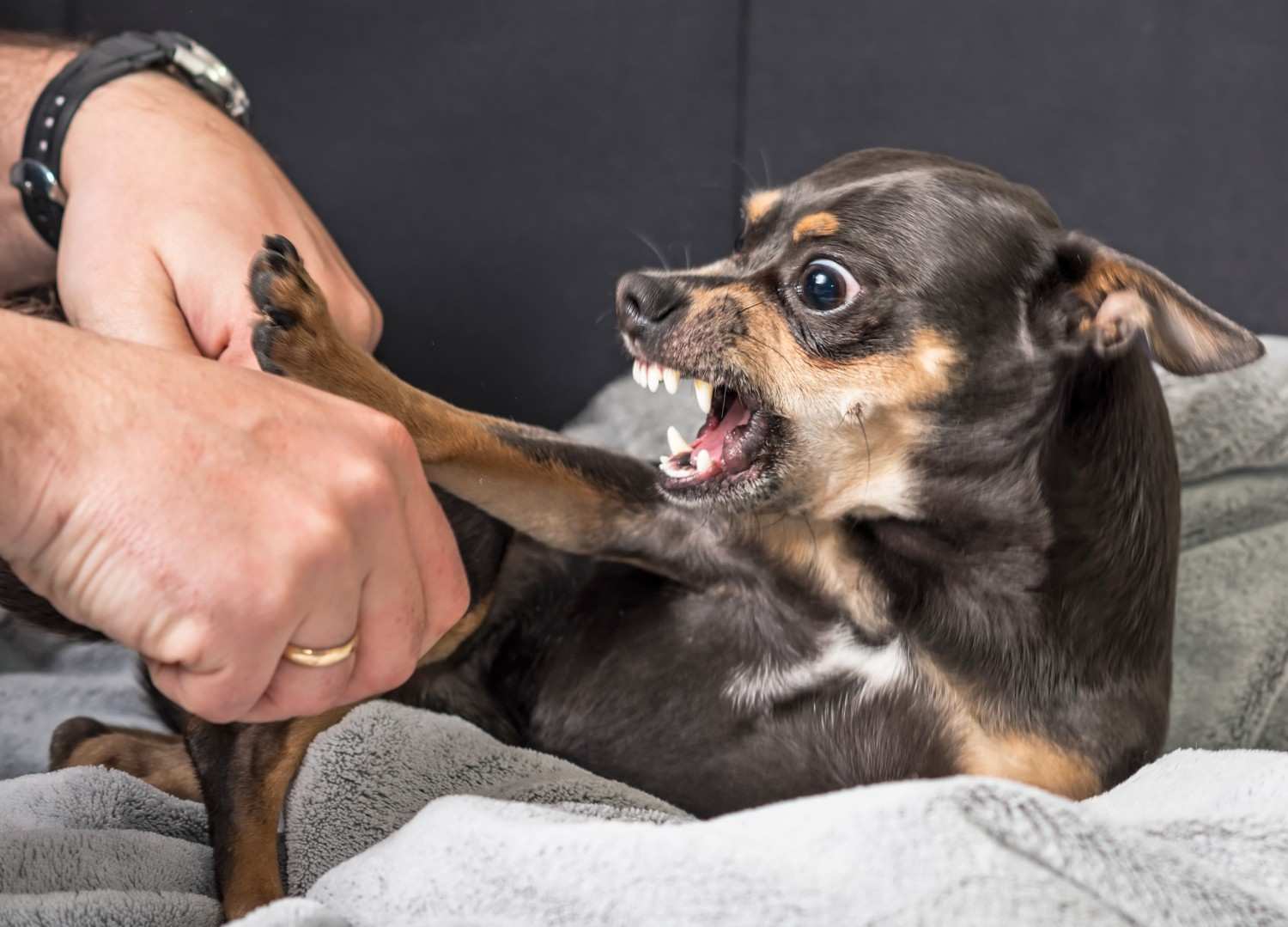
A dog bite at someone’s home usually leads to an obvious first question: Who owns the dog?
When the attack happens at a business, the answer may not resolve everything.
More workplaces have become pet-friendly, allowing employees to bring dogs to the office. Customers may encounter dogs at stores, outdoor restaurant patios, hotels, apartment leasing offices, or other businesses.
And at veterinary clinics, groomers, boarding facilities, and pet-related businesses, interacting with animals is part of the environment itself.
If one of those dogs attacks a customer, employee, delivery driver, or other visitor, responsibility may extend beyond the individual dog owner in some circumstances. But a bite on commercial property does not automatically make the business or property owner liable.
Utah Law Starts With the Person Who Owns or Keeps the Dog
Utah law generally holds a person who owns or keeps a dog liable for injuries caused by the animal, even if the dog had not previously shown vicious or mischievous behavior.
That means a victim generally does not have to show the dog had bitten someone before to pursue a claim against its owner or keeper.
A separate question arises when someone else controlled the property where the attack occurred.
Was the dog regularly permitted there? Who controlled it? Did the business know the animal presented a danger? Did someone other than its owner undertake responsibility for the dog?
Those questions can determine whether additional liability issues are worth investigating.
What If an Employee Brings a Dog to Work?
Imagine a Salt Lake City office where employees are encouraged to bring their dogs to work.
One employee regularly keeps a dog beside their desk. The animal roams through shared spaces, encounters coworkers and clients, and has become a familiar presence in the office. One afternoon, it bites a visitor.
The dog’s owner would be an obvious focus of the claim. But the workplace arrangement may raise additional questions.
Did management know the dog was routinely present? Were employees required to keep pets leashed or confined? Had anyone previously complained that the dog growled, lunged, or behaved aggressively? Did the business have rules for workplace pets, and did it enforce them?
A business that merely happens to be the location of an unexpected dog attack is different from one that knowingly allows animals into the workplace and exercises some control over how they interact with visitors.
Customer-Friendly Can Also Mean Dog-Friendly
Employees are not the only people bringing dogs onto commercial property.
Some Utah businesses welcome customers accompanied by pets. Restaurants may permit dogs in certain outdoor patio areas. Hotels may offer pet-friendly accommodations. Retailers and other establishments may adopt policies allowing customers to shop with their dogs.
Service animals present a different situation because federal disability law generally requires businesses to allow qualifying service animals in public accommodation areas where customers are allowed.
These circumstances matter because a dog may be expected rather than unusual.
If a business regularly allows pets, an investigation following an attack may examine how the property was managed, what rules applied to animals, whether dogs were required to remain under their handlers’ control, and whether employees responded to warning signs before someone was injured.
Some Businesses Encounter Dogs as Part of Their Daily Operations
Another category involves businesses where animals are not simply permitted on the property. They are part of the business.
Veterinary clinics, dog groomers, boarding facilities, dog daycare businesses, pet stores, and training facilities may have multiple animals entering and leaving throughout the day.
A bite in one of these settings can present very different facts from an attack by a customer’s dog at an ordinary retail store.
Who had custody of the dog when the attack occurred? Was an employee handling it? Was the animal supposed to be restrained or separated from customers? Did the business receive information about aggressive behavior? Were gates, kennels, doors, or other barriers being used appropriately?
Determining who was actually keeping or controlling the dog at the time can become especially important.
Does Owning the Property Make Someone Responsible?
Not necessarily.
In 2025, the Utah Supreme Court considered whether a landlord could be held liable after a tenant’s dog attacked a child. The court rejected liability against the landlord under those circumstances and emphasized that landlords are generally not responsible simply for their tenants’ torts.
That distinction also matters when a dog attack occurs at a business operating on leased property.
The company occupying and controlling the premises may be different from the person or entity that owns the building.
A commercial landlord who has no involvement with the dog or day-to-day control over the business should not automatically be treated the same as a business that invited or permitted the animal onto the premises.
The relationships among the dog owner, business operator, property owner, employees, and other parties therefore need to be identified rather than assuming everyone connected to the location shares responsibility.
A Dog Bite at a Business Can Require a Wider Investigation
After an attack at a Utah business, evidence may disappear quickly.
Surveillance footage can show where the dog was before the attack, who was handling it, and whether employees interacted with the animal. Incident reports may document what employees observed.
Witnesses may know whether the dog had behaved aggressively earlier. Workplace pet policies, customer rules, prior complaints, and communications concerning the animal may provide additional context.
Animal control records can also help establish what happened after the attack and whether other incidents involving the dog had previously been reported.
The goal is not simply to identify where the bite happened. It is to determine who owned, kept, controlled, or knowingly interacted with the animal and whether another party’s conduct contributed to the circumstances that allowed the attack to occur.
Find Out Who May Be Responsible After a Utah Business Dog Attack
Being bitten inside an office, store, restaurant patio, or other commercial property can create liability questions that do not arise in a typical residential dog attack.
Waddoups Law represents dog bite victims in Salt Lake City and throughout Utah. Our personal injury attorneys investigate the dog’s ownership and control, how the animal entered the property, available surveillance footage, prior incidents, and the roles of the people and businesses involved.
If you were seriously injured by a dog at a Utah business, contact Waddoups Law for a free consultation to discuss what happened and who may be responsible.
Riley T. Waddoups, a personal injury attorney with 20 years of experience, represents clients across Utah in cases like wrongful death, truck accidents, and slip and falls. He is skilled in mediation, arbitration, and trial. Riley values family and has developed strong relationships with many clients over the years.
I can’t say enough good things about Waddoups Law Personal Injury Attorneys! I had some legal issues and decided to go with this firm. I’m so happy I did! The...
L L
These folks are amazing! Michelle is honest and upfront about the process and the different ways things can go. Thank you for all of your hardwork!
Mr Beasley
Looked over a contract for me. Was very professional and timely. Thanks George!
Chase Thomason
George and Jeri were incredible. I was riding my bike and was hit by a car and broke my back and had a TBI. I was so overwhelmed, but trying...
Sherie Christensen
George (& Geri) have repeatedly bested my expectations. After a car accident they took the majority of the pressure off so I could focus on getting the treatments I needed...
Natalie Clements
My wife and I had the privilege of working with Waddoups Law Personal Injury Attorneys, specifically Geri Kelley, and we cannot express our gratitude enough for their outstanding legal support....
Trent Covert
I am so grateful to George Waddoups and his team for effectively helping me through a very challenging legal matter. His knowledge and expert guidance made a significant difference in...